


04 Jul From Waste to Energy: How Biomass Briquettes Are Made
In a world increasingly focused on sustainable energy and environmental conservation, the need for renewable fuel sources has never been more urgent. Among these alternatives, biomass briquettes have emerged as a reliable and eco-friendly substitute for traditional fossil fuels like coal, wood, and diesel. Especially in India, where agricultural waste is abundantly available, the transition from waste to energy through biomass briquettes production is proving to be a game-changer.
In this blog, we will explore in detail how biomass briquettes are made, their environmental and economic benefits, and the complete briquette making process step by step. This guide is especially tailored for Indian industries, farmers, entrepreneurs, and sustainability enthusiasts who wish to understand the biomass briquettes manufacturing process using agricultural waste.
What Are Biomass Briquettes?

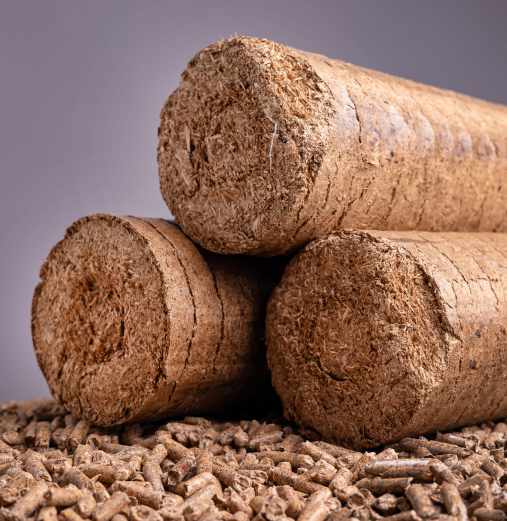
Biomass briquettes are solid fuel blocks formed by compressing organic agricultural and forestry waste like sawdust, groundnut shells, rice husk, sugarcane bagasse, wheat husk, mustard husk, and cotton stalks. These briquettes are cylindrical or rectangular in shape and are widely used for heating and energy generation in boilers, furnaces, and even in domestic cooking setups.
They are a carbon-neutral fuel source and burn cleaner than coal or traditional firewood, making them a promising fuel alternative for both rural and urban applications.
Why Choose Biomass Briquettes from Agricultural Waste?
India produces millions of tons of agricultural waste annually, much of which is burnt in open fields, causing severe air pollution and health hazards. Turning this agri-waste into fuel through briquetting offers several advantages:
- Reduces air pollution by minimizing crop residue burning.
- Provides additional income for farmers from their waste.
- Lowers dependency on fossil fuels.
- Boosts rural entrepreneurship and job creation.
- Improves energy efficiency for industries using solid fuels.
Biomass Briquettes Manufacturing Process
Let us now walk through the briquette making process step by step:
Step 1: Collection of Raw Materials
The process begins with sourcing biomass waste. This includes agricultural residues like:
- Rice husk
- Groundnut shells
- Sugarcane bagasse
- Cotton stalks
- Mustard husk
- Sawdust
These raw materials are collected from farms, agro-processing units, or forest residues.
Step 2: Drying the Raw Material
The moisture content of raw biomass should ideally be below 10-12% to ensure high-quality briquettes. Sun drying or using rotary dryers helps bring down the moisture content.
Step 3: Size Reduction / Crushing
Once dried, the biomass is passed through a crusher or hammer mill to reduce its particle size to 2-10 mm. Proper size is essential for uniform briquette formation.
Step 4: Mixing (Optional)
If multiple biomass types are used, the crushed material is mixed uniformly to ensure consistency in quality and calorific value.
Step 5: Briquetting
The prepared biomass is then fed into a briquetting machine, which uses high pressure and heat to compress the material into briquettes. No binders or chemicals are used in most cases, making it a clean process.
Briquetting machines used in India include:
- Piston press machines (mechanical)
- Screw press machines
- Hydraulic briquetting machines
Step 6: Cooling and Storage
Freshly made briquettes are hot and soft. They are cooled in ambient air or with the help of a cooler and then stored in a dry, ventilated place to avoid moisture absorption.
Step 7: Packaging and Distribution
Briquettes are packed into jute bags, HDPE bags, or bulk containers for transportation to industries, households, or retail outlets.
Biomass Briquettes Production in India: Current Scenario
India is among the top producers of agricultural waste in the world. The government and private sector have started recognizing the potential of biomass briquettes production in India. States like Punjab, Haryana, Uttar Pradesh, and Maharashtra are leading the movement thanks to their extensive agricultural activities.
According to recent data, India’s biomass briquette production capacity has grown significantly in the last five years, with many MSMEs and startups entering this domain. With growing demand in the cement, textile, and food processing sectors, biomass briquettes are gradually replacing coal and wood as the preferred fuel.
Benefits of Biomass Briquettes
Here are some of the most significant benefits of using biomass briquettes from agricultural waste:
- Eco-Friendly: Briquettes burn cleaner, emitting less CO2 and no sulfur.
- Cost-Effective: Lower fuel costs compared to coal, diesel, or LPG.
- High Calorific Value: Offers heating value between 3500-4500 kcal/kg.
- Renewable & Sustainable: Made from renewable sources.
- Low Ash Content: Less than 10%, making disposal easier.
- Ease of Handling: Uniform shape and size make storage and transportation easy.
- Employment Generation: Especially in rural areas through raw material collection, processing, and packaging.
Challenges in Biomass Briquetting in India
Despite its advantages, the adoption of briquettes faces a few roadblocks:
- Lack of awareness among industries and consumers.
- Seasonal availability of certain biomass types.
- Need for standardization in quality.
- High initial cost of machinery for small entrepreneurs.
With the right policy support, subsidies, and public-private partnerships, these challenges can be gradually overcome.
Future of Biomass Briquettes in India
As India targets carbon neutrality and boosts its renewable energy mix, biomass briquettes from agricultural waste will play a crucial role. The government’s National Bio Energy Mission and other sustainability programs are pushing industries to adopt cleaner fuels.
New innovations in briquetting technology, better logistics, and farmer education will further drive this industry forward. In the next decade, biomass briquettes could become the primary fuel for small and medium-scale industries across the country.
Final Thoughts
From crop residue to clean energy, the biomass briquettes manufacturing process represents a sustainable leap toward a greener future. Whether you’re a farmer looking to monetise your waste or an industry looking to reduce emissions and fuel costs, briquettes offer a win-win solution.
As India continues to battle pollution and seek renewable energy alternatives, understanding how biomass briquettes are made and promoting their usage will be key to shaping a cleaner, energy-efficient tomorrow.
Are you ready to make the switch from waste to energy?
Choose QualityBio—India’s trusted name in sustainable fuel solutions.
For more updates follow our social handles [Youtube]
No Comments